

In modern construction, concrete placement is a critical operation that demands absolute precision. While various methods exist for moving material, the concrete bucket remains the most versatile tool for crane-lifted delivery, especially in high-rise cores, bridge decks, and complex foundations. However, selecting the right bucket is not just about volume; it is about controlling the flow, minimizing waste, and ensuring structural integrity. Here are five critical factors to evaluate before making your choice.
1. Discharge Configuration and Pouring Precision
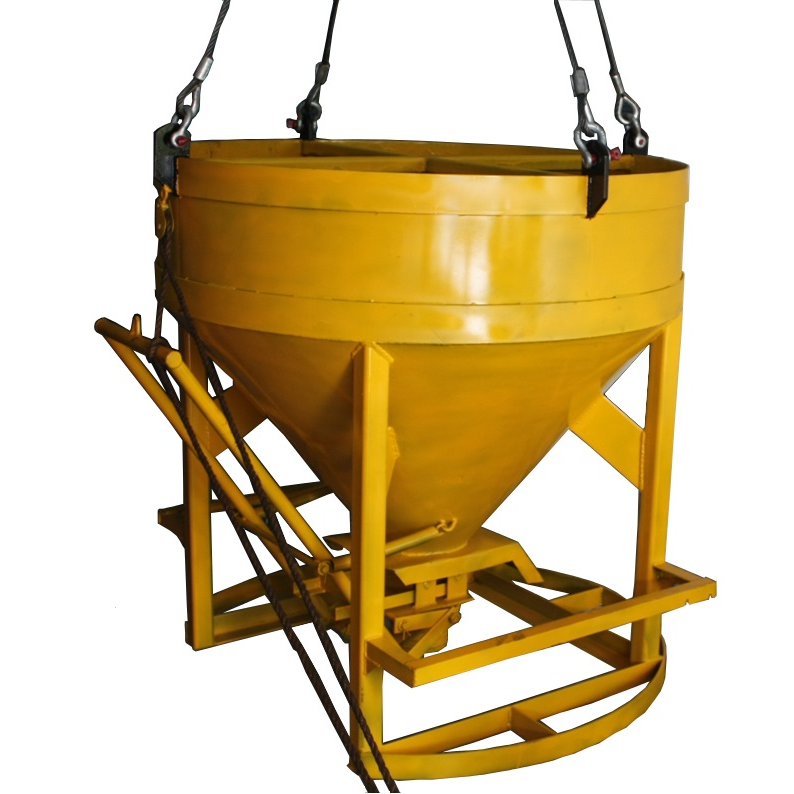
The design of the discharge outlet determines how much control your team has over the pour. Not every concrete bucket is suitable for every task.
- Conical Buckets with Rubber Hose: These are engineered for precision. The rubber hose allows operators to direct the flow into narrow formwork or heavily reinforced areas, preventing splashing and material segregation.
- Central and Bottom Discharge: These configurations are designed for high-volume, direct placement. They allow for a faster pour, making them ideal for large-scale ground slabs or massive foundations where speed is as important as accuracy.
- Column Skips: Specifically designed for walls and columns, these ensure that concrete is placed accurately to maintain the structural performance of vertical elements.
2. Capacity and Crane Load Management
The capacity of a concrete bucket must strike a balance between site productivity and safety. While larger buckets reduce the number of crane cycles, they must remain within the Safe Working Load (SWL) of your lifting equipment.
Calculating the Payload
It is vital to account for the density of wet concrete (approximately 2,400 kg/m³). A bucket that is too large for the crane’s reach at a specific radius can lead to catastrophic site accidents. Always ensure the bucket size matches your crane’s capacity chart to maintain a safe and steady workflow.
3. Structural Durability and Material Build
A concrete bucket operates in a punishing environment involving high-impact loads and abrasive materials.
Heavy-Duty Steel Construction
Ensure the bucket is manufactured from heavy-duty steel. This prevents the frame from warping under the weight of the mix and resists the corrosive nature of wet cement. A robust, straightforward design not only extends the operational service life but also reduces the maintenance required between pours, making it a more cost-effective tool in the long run.
4. Flow Control and Gate Mechanism
Precision pouring directly affects the amount of material waste on site. The gate mechanism should allow the operator to start and stop the flow instantly.
Whether using a manual lever or a more advanced discharge system, the gate must operate smoothly without leaking. Efficient flow control ensures that concrete is delivered exactly where it is needed, reducing the time spent on manual cleanup and ensuring the pour stays within the designated formwork boundaries.
5. Compliance with Safety and Quality Standards
In the construction sector, compliance is non-negotiable. A professional-grade concrete bucket must be built and tested to meet rigorous international and local standards.
Essential Certifications
Look for equipment that adheres to:
- ASTM Standards: For material and structural quality.
- ISO 9001:2015: Ensuring consistent manufacturing excellence.
- Local Safety Regulations: Such as KSA site safety requirements for crane-lifted equipment.
Properly certified equipment will always feature a data plate displaying the tare weight, maximum capacity, and serial number for inspection purposes.
Choosing the right concrete bucket involves more than just picking a container; it’s about selecting a precision instrument that aligns with your project’s engineering needs. By focusing on discharge types—like conical or central configurations—and ensuring heavy-duty steel construction and safety compliance, you can optimize your concrete placement for both speed and structural reliability.
References