

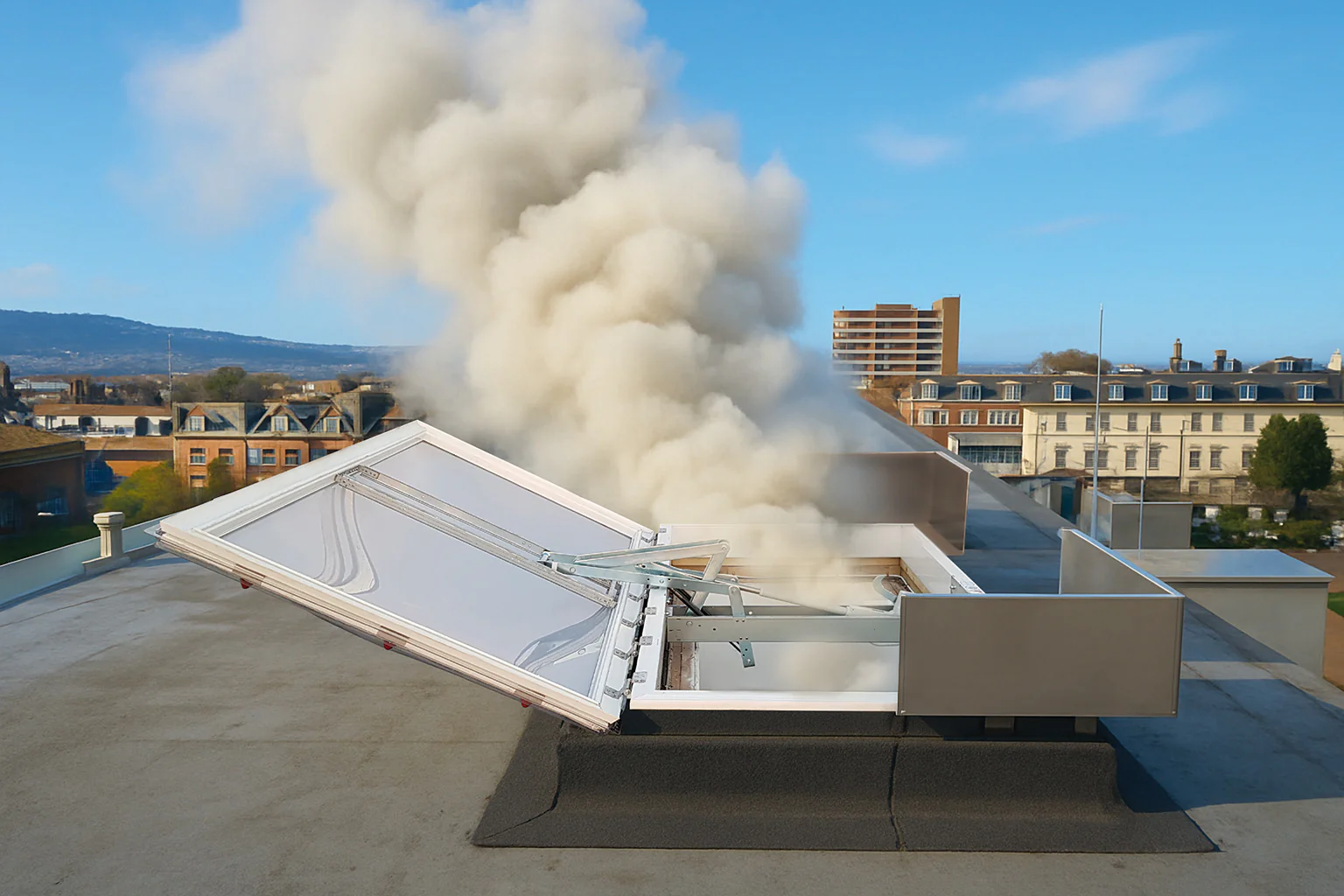
Building safety depends on more than just extinguishing flames; it requires managing the toxic smoke that follows. Smoke vents are critical components of a modern fire safety strategy, designed to act as “emergency exits” for heat and smoke. In the event of a fire, these vents open automatically to release dangerous gases, ensuring that escape routes remain visible and breathable for residents.
1. How Smoke Vents Protect Occupants
Toxic smoke causes significantly more fatalities in building fires than the actual flames. Smoke rises quickly, filling hallways and stairwells, which can lead to disorientation and breathing difficulties for those trying to evacuate.
A. Restoring Visibility and Breathable Air
By opening at the top of a building or stairwell, vents draw smoke upward and out. This clearing effect allows residents to see exit signs clearly and navigate stairways without inhaling toxic fumes.
B. Countering the Danger of Flashovers
Releasing trapped heat prevents a dangerous phenomenon called “flashover,” where a room becomes so hot that every combustible material inside ignites simultaneously. Smoke vents act as a pressure relief valve for this intense thermal energy.
2. Assisting First Responders
Firefighters face immense challenges when entering a smoke-filled building. Smoke vents act as a vital tool for emergency teams by providing a clearer path to the source of the fire.
C. Reliable Automatic and Manual Triggers
Most modern vents are equipped with heat-sensitive links that melt at a specific temperature, triggering the vent to spring open automatically. Additionally, firefighters have access to manual overrides, allowing them to control the vents directly during emergency operations.
3. Strategic Placement for Maximum Safety
Engineers position smoke vents in specific high-risk areas to ensure they perform effectively when every second counts.
D. Stairwell and Roof Integration
- Stairwells: Keeping primary evacuation routes clear of smoke is the number one priority for life safety.
- Large Open Areas: In commercial buildings, roof vents prevent smoke from “mushrooming”—a process where smoke spreads horizontally across the ceiling and traps occupants.
4. Conclusion: A Breath of Fresh Air in Emergencies
Smoke vents are silent guardians that remain closed and unnoticed until the moment they are needed most. By venting heat and toxic gases to the outside, they transform a potentially trapped environment into a manageable one. Investing in high-quality, well-maintained smoke vents is not just a regulatory requirement; it is a fundamental commitment to protecting human life.
References