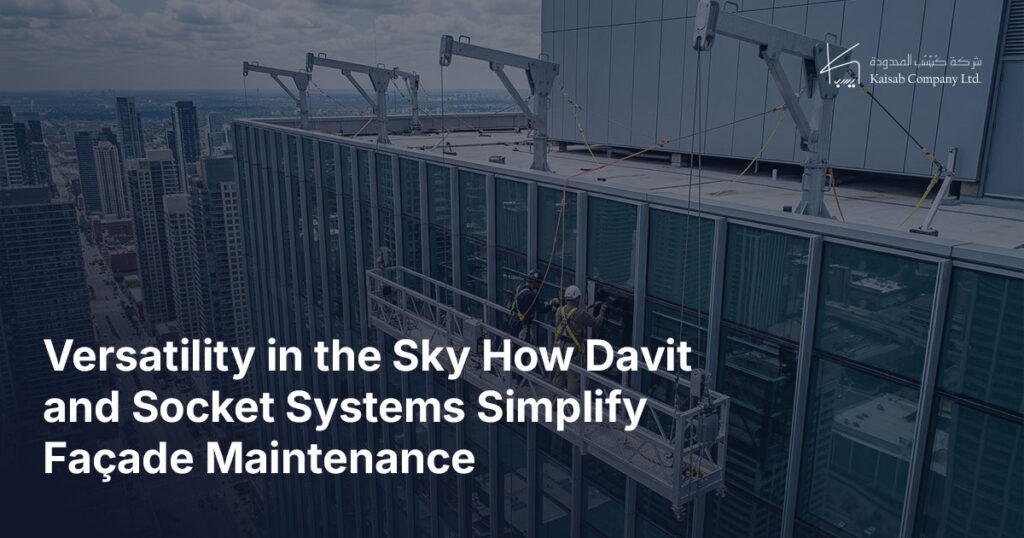
Certified Davit and Socket Systems offer unparalleled versatility for high-rise buildings that require efficient façade access without the permanent footprint of heavy machinery. In modern urban architecture, roof space is often a premium commodity, reserved for HVAC units, helipads, or luxury amenities. These systems solve the spatial dilemma by utilizing permanently fixed sockets and removable arms that can be deployed only when needed. This modular approach ensures that maintenance personnel can safely access every section of the façade while the building retains its clean, intended silhouette when the equipment is stored away.
For developers and facility managers, these systems represent a strategic balance between high-load capacity and architectural discretion, making them a cornerstone of modern building maintenance infrastructure.
1. The Engineering Logic of Davit and Socket Systems
The fundamental appeal of this technology lies in its split-component design, which separates the structural mounting from the mechanical lifting arm.
A. Permanent Sockets and Strategic Placement
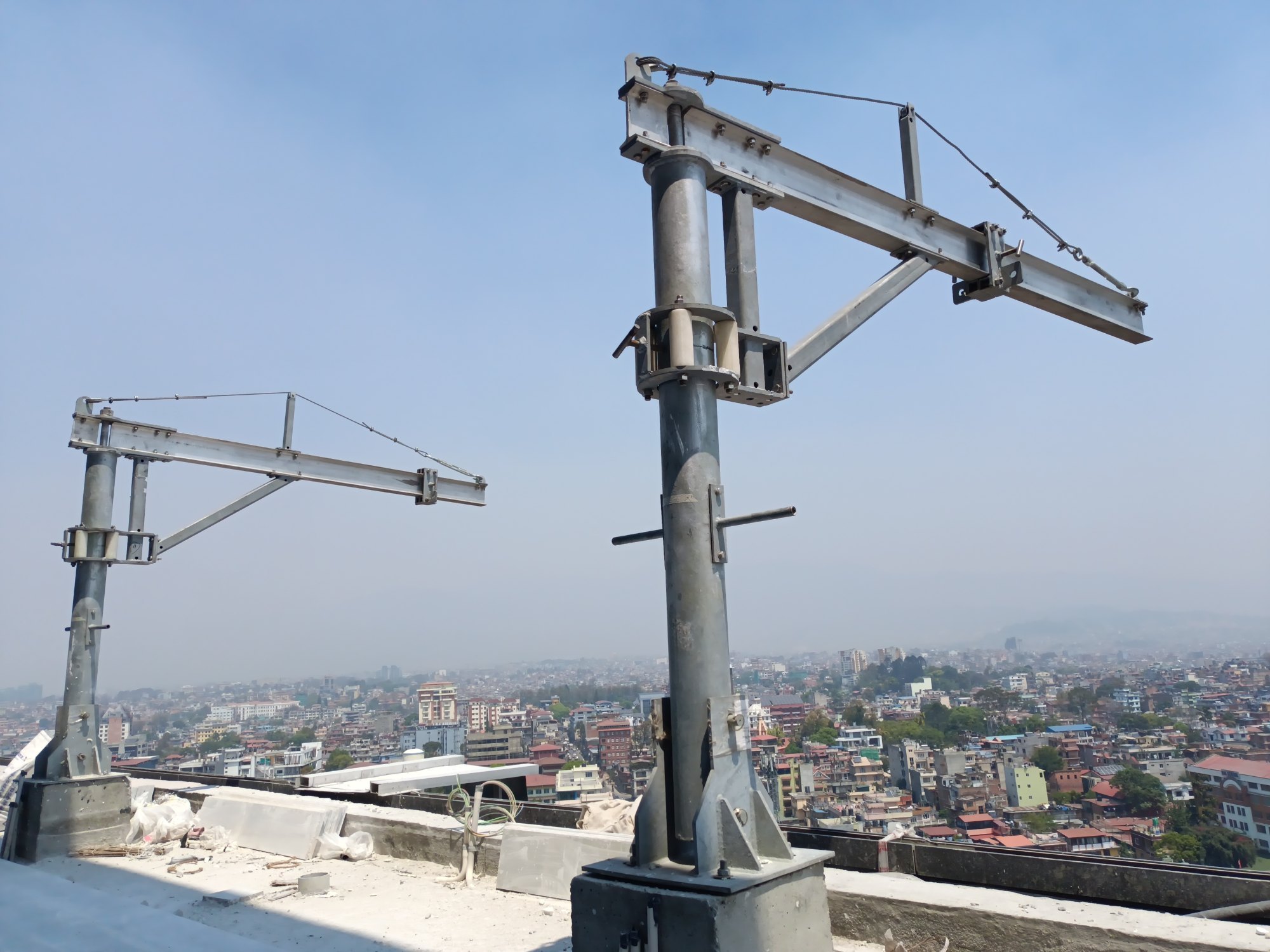
The “Socket” is the permanent anchor of the system, typically hot-dip galvanized or made of stainless steel to resist environmental degradation. These sockets are strategically positioned along the roof perimeter or integrated into the parapet wall. During the design phase, engineers calculate the exact spacing of these sockets to ensure that the suspended cradle or platform covers the building’s exterior. This precision ensures that there are no “blind spots” during window cleaning or structural sealing tasks, adhering to strict coverage principles.
B. Portable Davit Arms and Load Capacity
The “Davit” is the removable arm that slots into the socket. Despite being portable, these arms are engineered to support significant weights, including personnel, tools, and the suspended platform itself. Modern davit arms are often fabricated from high-strength aluminum to keep them lightweight enough for manual handling by two technicians, yet robust enough to handle dynamic loads during operation. This portability allows a single set of arms to be moved from one socket to another, reducing the total equipment cost for the building owner.
2. Enhancing Architectural Integrity and Space
One of the most significant hurdles in high-rise design is the visual “clutter” caused by maintenance equipment. Davit and Socket Systems provide a solution that prioritizes the architect’s vision.
C. Minimal Visual Impact
When the maintenance cycle is complete and the davit arms are removed, the only remaining visible elements are the low-profile sockets. These can be fitted with aesthetic caps or even recessed beneath the roof paving, making them completely invisible from ground level. This is a massive advantage over permanent Building Maintenance Units (BMUs) that require large tracks and constant visibility on the skyline.
D. Optimized Roof Utilization
By eliminating the need for bulky horizontal tracks, these systems free up valuable roof real estate. This allows developers to utilize the roof for solar panels, green gardens, or additional penthouse space. The flexibility of these installations is particularly beneficial for buildings with irregular roof shapes or tiered terraces where a traditional traversing system would be impossible to install.
3. Safety Compliance and Operational Benefits
Beyond aesthetics and space-saving, these systems are built on a foundation of rigorous safety standards to protect the lives of those working at height.
E. Rigorous Load Testing and Certification
Every installation must undergo strict initial load testing. Since the system relies on the interface between a removable arm and a fixed socket, the tolerance levels are extremely tight. Compliance with international quality standards and local Saudi Civil Defense regulations ensures that the structural fixings can withstand the moments and shear forces generated by the cantilevered davit arms.
F. Simple and Repeatable Setup
The simplicity of the system reduces the risk of operational errors. The “plug-and-play” nature of the sockets ensures that maintenance teams can set up the equipment quickly and consistently. Because there are fewer moving mechanical parts than a motorized BMU, the long-term maintenance costs for the system itself are significantly lower, providing a better return on investment over the building’s lifecycle.
Integrating high-quality access solutions is not just a regulatory requirement; it is a commitment to the long-term health of the building. When a facility employs Davit and Socket Systems, it gains a flexible, durable, and safe method for maintaining its most visible asset—the façade. In the competitive world of real estate, the ability to keep a building looking pristine while maintaining a clean roofline is a distinct advantage that pays dividends in both safety and style.
References & Links
- EN 1808: Safety requirements for suspended access equipment – Design and calculations.
- OSHA 1910.27: Duty to have fall protection and working surfaces for davit systems.
- ISO 9001:2015: Quality management systems for engineering and fabrication.