
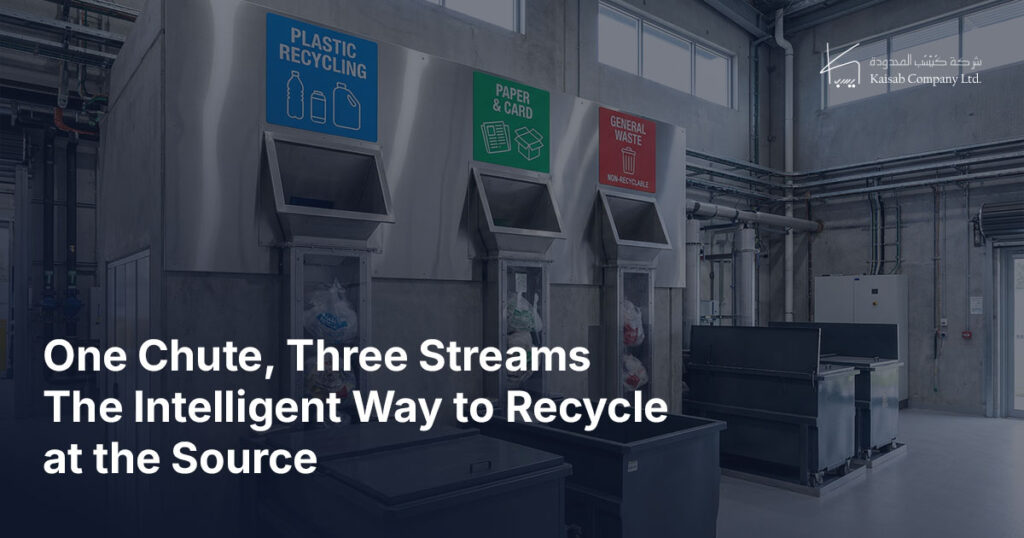
Modern architecture and high-rise developments face a growing challenge: how to implement sustainable recycling without sacrificing floor space or operational efficiency. Traditional waste management often relies on multiple chutes, which is both costly and space-consuming. Waste Segregation Systems, such as Bi-Sorters and Tri-Sorters, offer a sophisticated solution by enabling multiple waste streams through a single chute.
This guide explores the technology behind intelligent waste segregation and how it supports green building initiatives worldwide.
1. The Logic of Professional Waste Segregation Systems
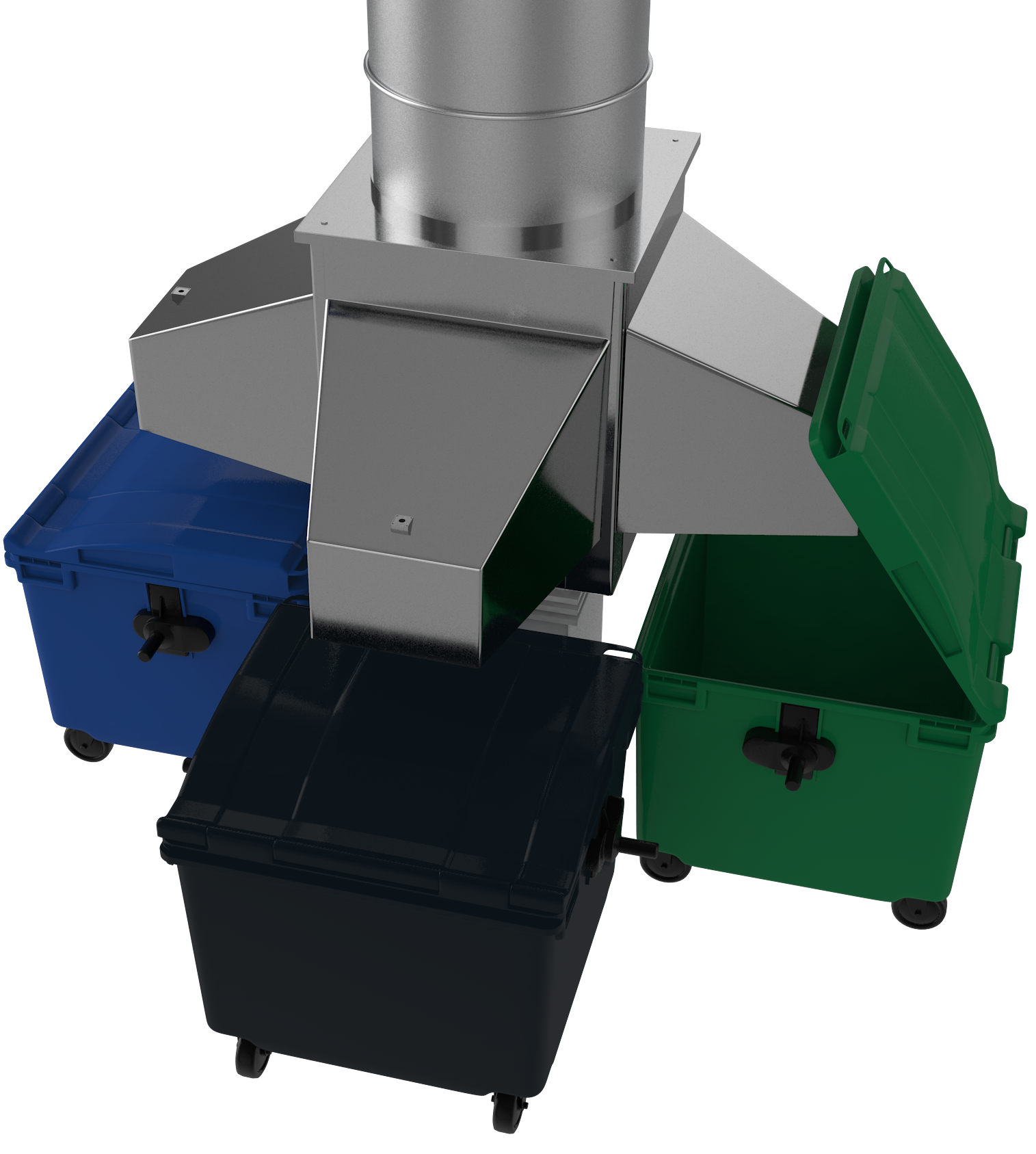
Effective waste management begins at the point of disposal. Instead of building three separate chutes for different materials, an intelligent Bi-Sorter or Tri-Sorter system uses a motorized diverter at the base of a single chute.
How the Technology Works:
When a user selects a waste category (e.g., Recyclables or Organics) on the intake panel, a heavy-duty motorized steel plate rotates to the correct position. This ensures that the waste is routed into the designated container before the intake door even opens, preventing any manual sorting errors.
2. Enhancing User Experience Through Intelligent Design
For a recycling system to be successful, it must be intuitive for residents and staff. Professional Waste Segregation Systems are designed with the human factor in mind to encourage correct disposal habits and high participation rates.
- Color-Coded Hoppers: Visual cues using standard recycling colors (e.g., Blue for paper, Green for organic) make the process seamless.

- Ergonomic Loading: Intake points are positioned at optimal heights to ensure accessibility for all users, including maintenance staff.
- Clear Labeling: Explicit signage at each intake point reduces confusion and ensures that the right material enters the right stream.
3. Safety and Hygiene via Advanced Interlocking
Maintaining a sterile and safe environment is paramount in multi-unit buildings. High-performance Waste Segregation Systems incorporate advanced interlocking protocols to maintain system integrity.
Preventing Cross-Contamination:
The interlocking system ensures that only one intake door can be opened at any given time. If a resident on the 10th floor is disposing of organic waste, the doors on all other floors remain locked until the diverter has cleared and reset. This prevents different waste streams from mixing and ensures the safety of the users.
4. Data-Driven Management with BMS Integration
Modern facilities rely on data to optimize performance. Integrating Waste Segregation Systems into a Building Management System (BMS) allows managers to transition from reactive to proactive waste handling.
- Real-Time Monitoring: Facility managers can track the status of bins and the diverter mechanism from a central master control panel.
- Usage Patterns: Tracking how much waste is being recycled versus general waste helps in generating sustainability reports.
- Alert Systems: Real-time notifications for full bins or mechanical maintenance ensure that the system never experiences downtime.
5. Supporting LEED and Green Building Goals
Automated Waste Segregation Systems are a significant contributor to achieving green building certifications like LEED. By making recycling the “path of least resistance” for occupants, buildings can significantly increase their diversion rates.
The Sustainability Impact:
Reducing the volume of general waste sent to landfills not only lowers disposal fees but also minimizes the building’s overall carbon footprint. A single-chute system proves that high-density living can coexist with responsible environmental stewardship.
The Smart Path to Sustainability
Transitioning to advanced Waste Segregation Systems is a strategic move for any modern development. By combining intelligent diversion technology with user-centric design and BMS integration, facilities can achieve high recycling rates while maintaining a clean, efficient, and space-saving infrastructure.
References