
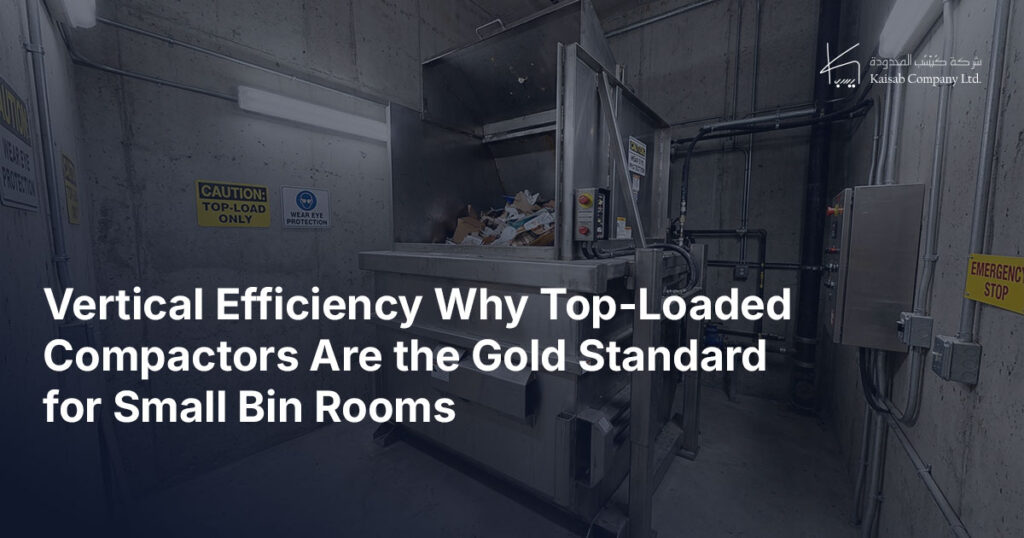
Space is the most expensive luxury in modern construction, yet many buildings still waste it on oversized and outdated waste management equipment. As developers strive to maximize leasable or sellable area, the “dead space” dedicated to service utilities has come under intense scrutiny. Top-Loaded Compactors have emerged as the premier solution to this challenge, offering a high-capacity waste management footprint that prioritizes vertical height over valuable floor area.
This article explores why these automated vertical systems have become the industry standard for modern, space-constrained bin rooms.
1. The Architecture of Verticality
Most residential and commercial towers are designed with a narrow “service core” where garbage chutes are located. In these layouts, the bin room at the base is often too small for horizontal equipment that requires extensive clearance.
Saving Floor Space:
Top-Loaded Compactors are engineered to sit directly underneath the chute. Because the compaction ram moves vertically (up and down), the machine only occupies the area of a standard waste container. This allows developers to fit a powerful compaction system in rooms as small as 4 square meters, leaving the rest of the floor for maintenance access or other essential utilities.
2. Automated “Set-and-Forget” Operation
Efficiency in modern facilities isn’t just about physical space; it’s about optimizing labor. A professional Top-Loaded Compactor eliminates the need for constant staff monitoring in the bin room.
- Optical Cell Technology: Using a high-precision transceiver at the top of the hopper, the system detects when the waste level reaches the threshold and triggers the compaction cycle automatically.
- Continuous Flow: Even while the machine is compacting, the top-loading design allows waste to continue falling from the chute without interruption, maintaining a clean environment and preventing backups in the chute system.
3. Enhanced Hygiene and Odor Control
Open waste containers in small, poorly ventilated rooms are a primary source of foul odors and pest issues. By integrating Top-Loaded Compactors directly with the chute outlet, you create a controlled, semi-sealed environment.
Compaction Ratio Impact:
By compressing waste at a ratio of up to 4:1, the exposed surface area of the refuse is significantly reduced. This slows down decomposition and prevents the “overflow crisis” common in high-density buildings, resulting in a fresher atmosphere and a more premium feel for the property.
4. Safety and Compliance Standards
Despite their compact footprint, high-quality Top-Loaded Compactors are heavy-duty machines built to meet global safety and fire regulations.
- Fire Safety (NFPA 82): These units are designed to withstand high temperatures and can be equipped with fire suppression interfaces to protect the building’s service core.
- User Protection: Integrated door interlocks and emergency stop buttons ensure that the machine cannot operate if a service door is open or if a container is not properly positioned.
- Durability: Using reinforced, corrosion-resistant steel ensures the system survives the humid and acidic environment of waste rooms for the building’s entire lifecycle.
5. Real-Time Connectivity (BMS Integration)
In the era of smart buildings, even waste management is data-driven. Modern Top-Loaded Compactors can be linked to a Building Management System (BMS), allowing facility managers to receive real-time notifications for:
- Container Full Alerts: Ensuring timely hauling.
- Maintenance Schedules: Predicting hydraulic service needs before a breakdown occurs.
- Safety Triggers: Instant alerts if an emergency stop is activated.
The Smart Choice for Modern High-Rises
For developers looking to maximize efficiency without sacrificing performance, Top-Loaded Compactors are the ultimate tool. Their ability to deliver high-pressure compaction within a minimal vertical footprint makes them the “Gold Standard” for any project where every square meter counts.
References