

Managing high volumes of refuse in high-rise buildings requires more than just a collection point; it demands a robust engineering solution. For developments that generate significant amounts of bulky waste—such as large cardboard boxes and packaging—standard systems can often lead to frequent clogs. Bottom-Loaded Compactors have emerged as the premier choice for handling these challenges, especially in buildings where architectural constraints limit vertical space.
This guide explores how these horizontal systems balance high-capacity performance with strict adherence to international safety standards.
1. Solving the Bulky Waste Challenge
Bulky waste is the primary cause of chute blockages and bin room overflows. Traditional vertical units may struggle with the geometry of oversized items, leading to operational downtime.
The Horizontal Advantage:
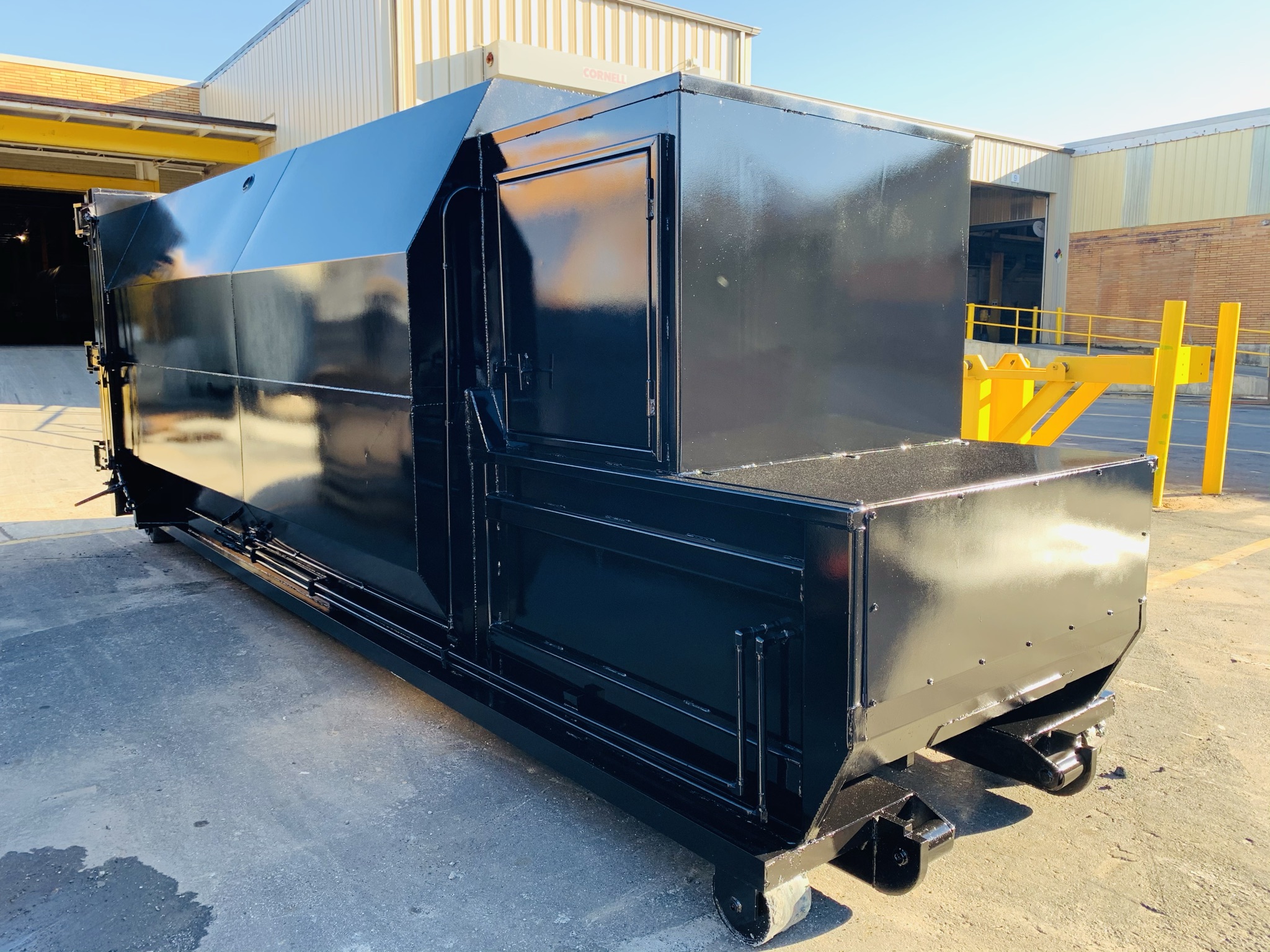
Bottom-Loaded Compactors feature a large-capacity reception chamber and a powerful horizontal hydraulic ram. This design allows the system to accept larger items directly from the chute and crush them with massive force. By processing waste horizontally, the system ensures a continuous flow, even during peak disposal hours in busy residential or commercial complexes.
2. Safety First: The Importance of NFPA 82 Compliance
In the world of high-rise construction, safety is non-negotiable. Fire safety in waste handling is governed by strict codes, most notably NFPA 82 (Standard on Incinerators and Waste and Linen Handling Systems and Equipment).
- Fire Suppression Integration: NFPA-compliant Bottom-Loaded Compactors are designed to integrate seamlessly with the building’s fire protection systems.
- Containment: The heavy-duty reinforced steel construction acts as a critical barrier, ensuring that in the unlikely event of a fire within the waste stream, it remains contained and manageable.
- Safety Interlocks: Automated sensors ensure that the ram never operates while a service door is open, protecting maintenance staff and residents alike.
3. Overcoming Low-Ceiling Architectural Constraints
Not every building has the luxury of a tall, expansive bin room. Basements and service cores in many urban developments often feature low ceilings that make vertical compaction impossible.
Optimized Footprint:
The horizontal orientation of Bottom-Loaded Compactors makes them the perfect fit for restricted areas. By utilizing floor length rather than ceiling height, facility managers can install high-capacity equipment in spaces that would otherwise be limited to small, non-compacted bins. This optimization allows for more efficient use of the building’s service floor.
4. Precision Control via PLC and Automation
Modern waste management is an automated process. Advanced Bottom-Loaded Compactors are equipped with Programmable Logic Controllers (PLC) and high-precision photo cells.
- Automated Cycles: A photo cell detects waste accumulation in the hopper and triggers the compaction cycle automatically.
- Real-Time Alerts: The PLC system can be programmed to send “Container Full” notifications to facility managers, ensuring timely hauling.
- BMS Integration: Optional connectivity to the Building Management System allows for centralized monitoring of all waste operations, supporting the building’s overall efficiency goals.
5. Long-Term Durability and Standards
Investing in a compactor is a long-term decision. Systems that meet UL 10B, ASTM, and BS 5906 standards are built to withstand the corrosive environment of a waste room. Using corrosion-proof reinforced steel ensures that the equipment remains operational for the building’s entire lifecycle, reducing the total cost of ownership.
The Engineering Choice for High-Volume Facilities
For buildings that cannot compromise on volume or safety, Bottom-Loaded Compactors offer the ideal balance. By combining the power to handle bulky waste with the safety assurance of NFPA 82 compliance, these systems provide a reliable, automated, and space-efficient solution for modern waste management.
References
- NFPA 82: Standard on Waste and Linen Handling Systems
- UL Standards: Fire Tests of Door Assemblies