

Efficiently moving palletized materials—such as blocks, cement bags, and tiles—to upper floors is a constant logistical challenge. While forklifts are king on the ground, they cannot reach the elevated zones of a high-rise project. This is where Crane Forks (also known as Pallet Forks for Cranes) become essential. Selecting the right equipment is not just about lifting weight; it is about balance, safety compliance, and operational speed.
1. Understanding Crane Forks Mechanisms
The most critical factor in selection is how the system maintains its center of gravity. A tilted load is dangerous, especially when hoisted hundreds of feet in the air.
-
Manual Balancing: These models require the crew to manually move the lifting ring along a notched beam. While cost-effective, they carry a higher risk of human error.
-
Self-Balancing (Automatic Leveling): These Crane Forks utilize a gas spring or mechanical mechanism that automatically compensates for the weight. As the lift begins, the fork adjusts to remain perfectly horizontal, making it the gold standard for high-rise safety.
2. Load Capacity and Tine Adjustability
Before purchasing, you must align the technical specifications of your Crane Forks with your project’s heaviest requirements.
Safe Working Load (SWL)
Always verify the Safe Working Load (SWL). Most construction-grade Crane Forks range from 1,500 kg to 3,000 kg. Never exceed this limit, as metal fatigue from overloading can lead to catastrophic structural failure.
Adjustable Tine Width
Pallets come in various international sizes. Using Crane Forks with adjustable tines allows the operator to slide them inward or outward to fit entry points securely. This prevents the load from shifting laterally during the ascent.
3. Essential Safety Features
Safety is the paramount concern when hoisting heavy pallets over active work zones. High-quality Crane Forks must include:
-
Safety Chains: To prevent loose items from falling if the pallet wrapping breaks.
-
Identification Plates: Every unit must state its Tare Weight, SWL, and Serial Number for inspections.
-
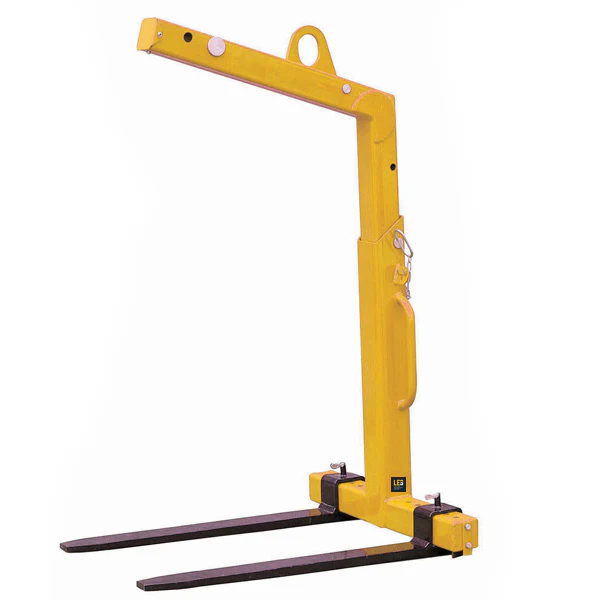
High-Visibility Finish: Painting Crane Forks in safety yellow or orange ensures the operator can monitor the load’s position from a distance.
4. Operational Best Practices
To maximize the lifespan of your Crane Forks and ensure site safety, follow these steps:
-
Pre-Lift Inspection: Check the tines for cracks or bending and ensure the spring mechanism functions smoothly.
-
Secure the Load: Ensure the pallet is pushed fully against the back frame. A “nose-heavy” load is a primary cause of failure.
-
Use the Safety Chain: Always wrap the chain around the pallet before signaling the lift.
5. Investing in Efficiency
Selecting the right Crane Forks is an investment in overall site efficiency. By prioritizing self-balancing mechanisms and strict safety compliance, site managers can ensure that materials move from the truck to the work face in one smooth, secure motion.
Professional References