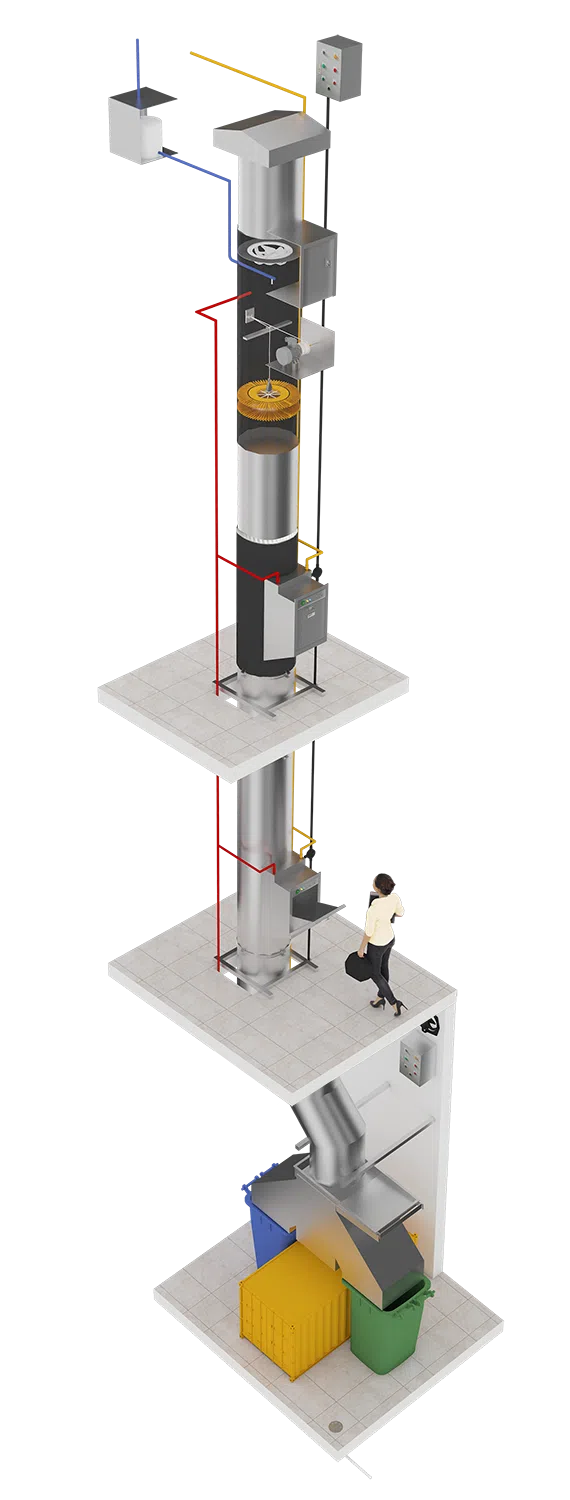

Garbage and Linen Chute Systems are the invisible veins of modern high-rise architecture. For decades, a persistent myth suggested that these vertical shafts acted as “fire highways,” accelerating disasters. However, contemporary engineering has turned this narrative around. Today, Garbage and Linen Chute Systems are sophisticated safety barriers designed to neutralize physical threats like the “Chimney Effect” before they can even manifest.
Understanding the Chimney Effect in Vertical Shafts
The Chimney Effect, or “Stack Effect,” is a physical phenomenon where air moves in and out of buildings through unsealed openings. In tall structures, the temperature difference between internal and external air creates a powerful upward draft. Historically, without proper Garbage and Linen Chute Systems, this draft could pull smoke upward rapidly.
Modern Garbage and Linen Chute Systems defy this by utilizing pressure-balanced engineering. By ensuring that intake doors are airtight and the discharge point is properly gated, the “vacuum” that once fueled fires is effectively neutralized. This is why investing in certified Garbage and Linen Chute Systems is no longer a luxury, but a core safety requirement for any developer.
The Anatomy of a High-Performance Chute Shield
To transform a potential hazard into a safe utility, high-performance Garbage and Linen Chute Systems incorporate multiple layers of active and passive defense that work in harmony during emergencies.
1. The Fire Damper (The Gatekeeper)
Positioned at the exit of the collection room, the fire damper is the most critical component of Garbage and Linen Chute Systems. It acts as a physical break in the vertical line. If sensors detect heat exceeding 74°C, the damper slams shut. This cuts off oxygen to the shaft, stopping any fire from climbing the building and isolating the trash room from the rest of the floors.
2. Interlocked Fire-Rated Intake Doors
In professional Garbage and Linen Chute Systems, the doors are more than just access points; they are UL-rated barriers. Modern systems feature electronic interlocking; when one door is open, the others lock to maintain air pressure. In a fire emergency, the building’s central control brain locks every hatch in the Garbage and Linen Chute Systems, sealing the shaft completely from residential corridors.
3. Automated Suppression and Wash-Down Units
Hygiene and safety go hand-in-hand. Advanced Garbage and Linen Chute Systems include automated sprinklers and cleaning units. These sprinklers are strategically placed to ensure that any combustion within the system is met with immediate force, while the cleaning cycle prevents the buildup of flammable organic residues and bacteria.
Optimizing High-Rise Logistics and Hygiene
Beyond safety, the operational efficiency of Garbage and Linen Chute Systems cannot be overstated. In healthcare facilities, a dedicated linen chute reduces the need for staff to transport soiled laundry through public elevators, drastically reducing the risk of cross-contamination.
In luxury residential towers, the presence of reliable Garbage and Linen Chute Systems ensures that waste management remains invisible to the residents. This maintains the “premium” feel of the property while ensuring that staff can manage huge volumes of waste with minimal manual labor.
Integration with Smart Building Technology
The latest generation of Garbage and Linen Chute Systems is fully integrated with Building Management Systems (BMS). This allows facility managers to monitor the status of the chute in real-time. Whether it’s a blockage alert, a full-bin sensor at the bottom, or a fire alarm trigger, the system provides instant data.
This level of connectivity ensures that Garbage and Linen Chute Systems are always operating at peak efficiency. Real-time monitoring allows for rapid response and preventative maintenance, which extends the lifespan of the equipment and guarantees the safety of the occupants.
Gravity Without Risk
The evolution of Garbage and Linen Chute Systems proves that smart design can turn a structural vulnerability into a high-performance asset. By defying the Chimney Effect through material science, automated protocols, and rigorous fire-testing, modern developers can offer residents both convenience and peace of mind. Investing in these systems is a commitment to the longevity and safety of the vertical community.