
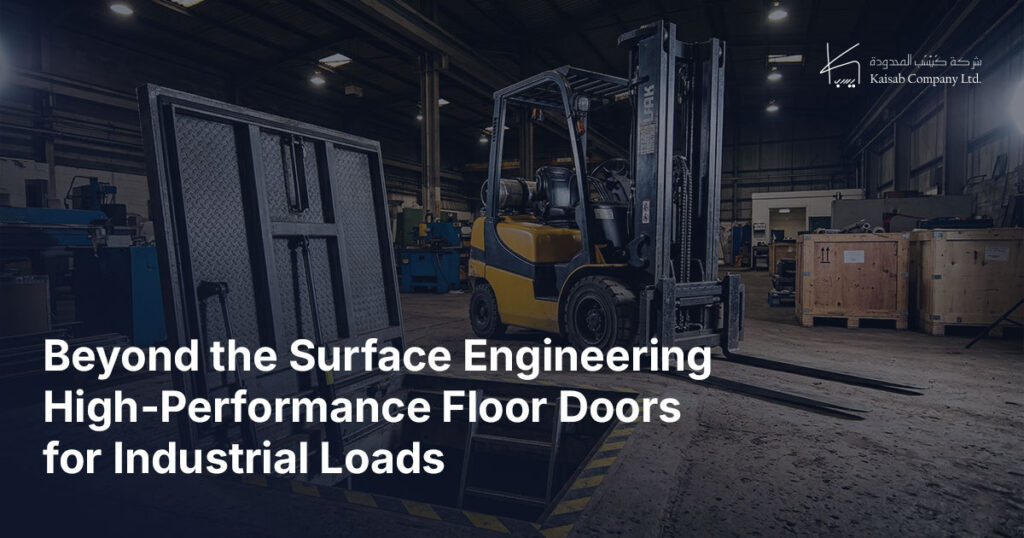
High-quality Floor Doors are essential components in modern infrastructure, providing a critical gateway to underground utilities while maintaining the structural integrity of the ground surface. In industrial and commercial environments, these doors must do more than just open and close; they must withstand immense pressure, resist environmental corrosion, and ensure the safety of every person walking or driving over them.
When engineering a floor access solution, “good enough” is never an option. The difference between a standard hatch and a high-performance floor door lies in the precision of its load rating and the durability of its mechanical components.
1. Load Ratings: The Backbone of Floor Door Safety
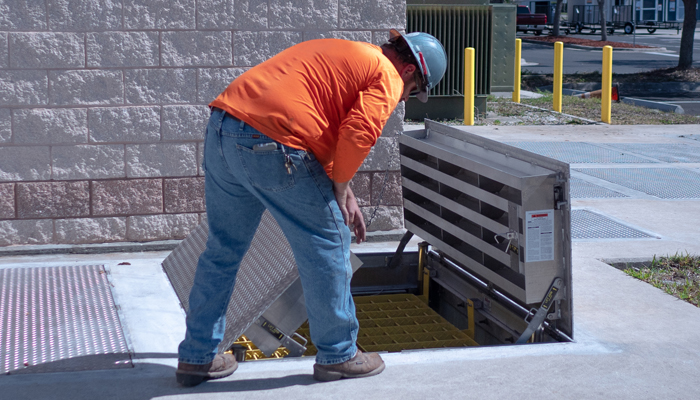
The most critical factor in specifying a floor door is understanding the type of traffic it will encounter. Unlike wall or ceiling panels, floor doors are subject to constant gravitational stress and impact.
A. Pedestrian vs. Vehicular Loads
In a commercial office lobby, a floor door might only need to handle pedestrian traffic (typically rated for $150 \text{ psf}$ or $7.2 \text{ kN/m}^2$). However, in a warehouse or a parking garage, the door must be engineered for vehicular loads. This involves calculating the “wheel load” of forklifts or delivery trucks. High-performance doors are often reinforced with heavy-duty diamond plate covers and internal stiffeners to prevent bowing or structural failure under several tons of weight.
B. Impact and Static Pressure
Industrial environments often involve moving machinery that creates vibrations and sudden impact loads. Engineering-grade floor doors utilize a double-wall frame construction to distribute this energy evenly across the surrounding concrete, preventing cracks in the floor finish and ensuring the door remains flush over decades of use.
2. Mechanical Excellence: Ease of Operation
A heavy-duty door is useless if it requires a team of people to lift it. High-performance engineering focuses on making heavy covers manageable for a single technician.
C. Gas Spring-Assisted Lifting
Modern floor doors are equipped with strategically calibrated gas springs. These cylinders act as a counterweight to the heavy steel or aluminum leaf, allowing a technician to open a 100-kg door with one hand. This is not just a convenience; it is a safety feature that prevents back injuries and ensures that maintenance tasks can be performed efficiently without specialized lifting equipment.
D. Safety Hold-Open Mechanisms
Safety is paramount when a technician is working inside a utility pit. Every KAISAB floor door features an automatic hold-open arm. Once the door reaches its fully open position (usually at $90^\circ$), the arm locks into place. This prevents the door from slamming shut due to wind, accidental bumps, or mechanical failure, providing a secure environment for underground inspections.
3. Material Science and Environmental Resistance
Industrial floor doors are often exposed to harsh conditions, from chemical spills in factories to humidity in underground tunnels.
E. Corrosion Resistance (Aluminum vs. Steel)
- Galvanized Steel: The standard for strength. When hot-dip galvanized, it provides excellent protection against rust in indoor industrial settings.
- Aluminum: Ideal for outdoor use or high-moisture areas. It offers a superior strength-to-weight ratio and natural resistance to corrosion without the need for additional coatings.
- Stainless Steel (Grade 304 or 316): The gold standard for chemical plants, food processing zones, and coastal areas where salt air would quickly degrade other metals.
F. Flush-Mounted Aesthetics and Safety
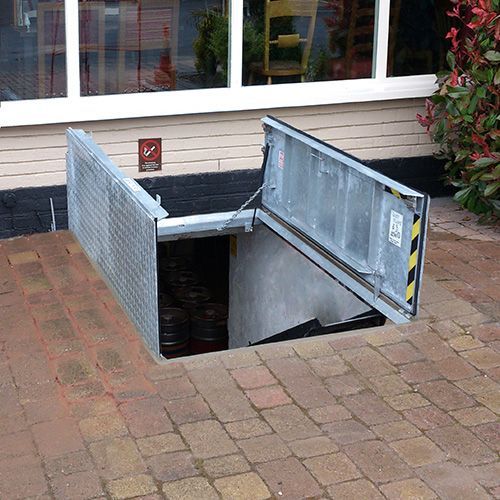
To eliminate trip hazards, the door must be perfectly flush-mounted. In high-end commercial projects, recessed floor doors are used, allowing for the insertion of marble, tile, or carpet into the door leaf. This ensures that the service point is virtually invisible while remaining fully functional for heavy-duty access.
4. Investing in Structural Integrity
Choosing a floor door is an investment in the building’s long-term safety and operational efficiency. By selecting a door that is engineered for specific load requirements and equipped with modern safety features, facility managers can prevent accidents, protect underground assets, and ensure seamless traffic flow. Whether it is a simple inspection hatch or a heavy-duty vehicular access point, the quality of what lies “beyond the surface” is what keeps a facility running smoothly.
References
- AASHTO H-20: Standards for vehicular bridge loading and floor hatches.
- OSHA 1910.28: Duty to have fall protection and falling object protection for floor holes.
- ISO 9001:2015: Quality management in the fabrication of industrial access solutions.