
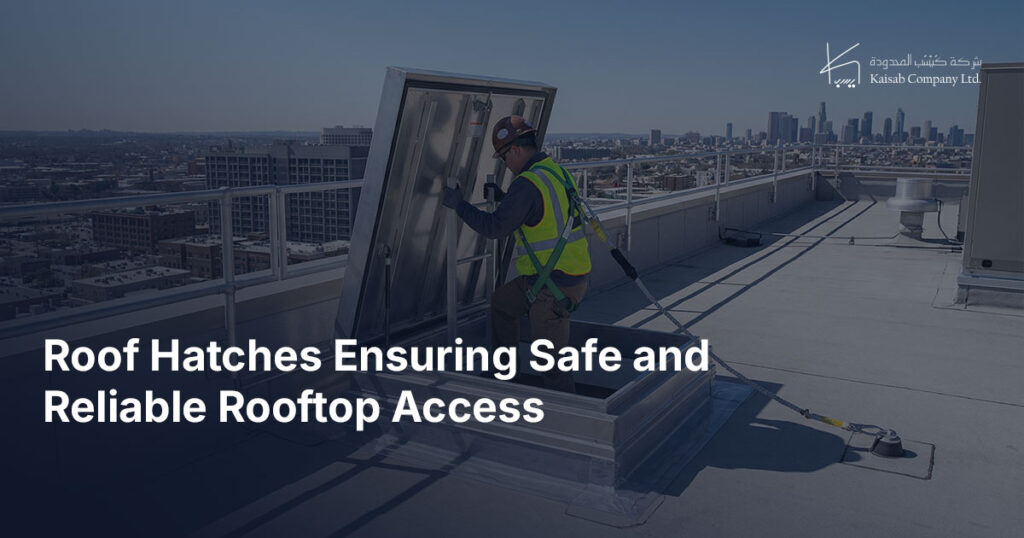
Rooftop maintenance is a non-negotiable part of modern building management, requiring a secure and durable point of entry. Roof hatches serve as the primary gateway for technicians to inspect HVAC systems, MEP equipment, and communication towers. Without a professionally engineered hatch, a building is not just difficult to maintain—it becomes a safety liability for both the staff and the structure itself.
Choosing the right roof hatch involves more than just picking a metal lid; it requires understanding the balance between ease of access, structural integrity, and weather-tight protection.
1. Why High-Quality Access Matters
Operating a commercial or industrial facility involves constant rooftop activity. From routine filter changes to emergency repairs, the entry point must be reliable under all conditions. A poorly designed hatch can lead to water leaks, energy loss, and even accidents during ascent or descent.
A. Protecting Against Harsh Climates
Regional environments, especially in Saudi Arabia, present unique challenges such as intense UV radiation, heavy dust storms, and occasional flash rains. A high-quality roof hatch features a double-wall curb design with integrated gaskets. This engineering ensures that the interior of your building remains dry and dust-free, providing a weather-tight seal that prevents costly water damage to the ceilings and equipment below.
B. Enhancing Technician Safety
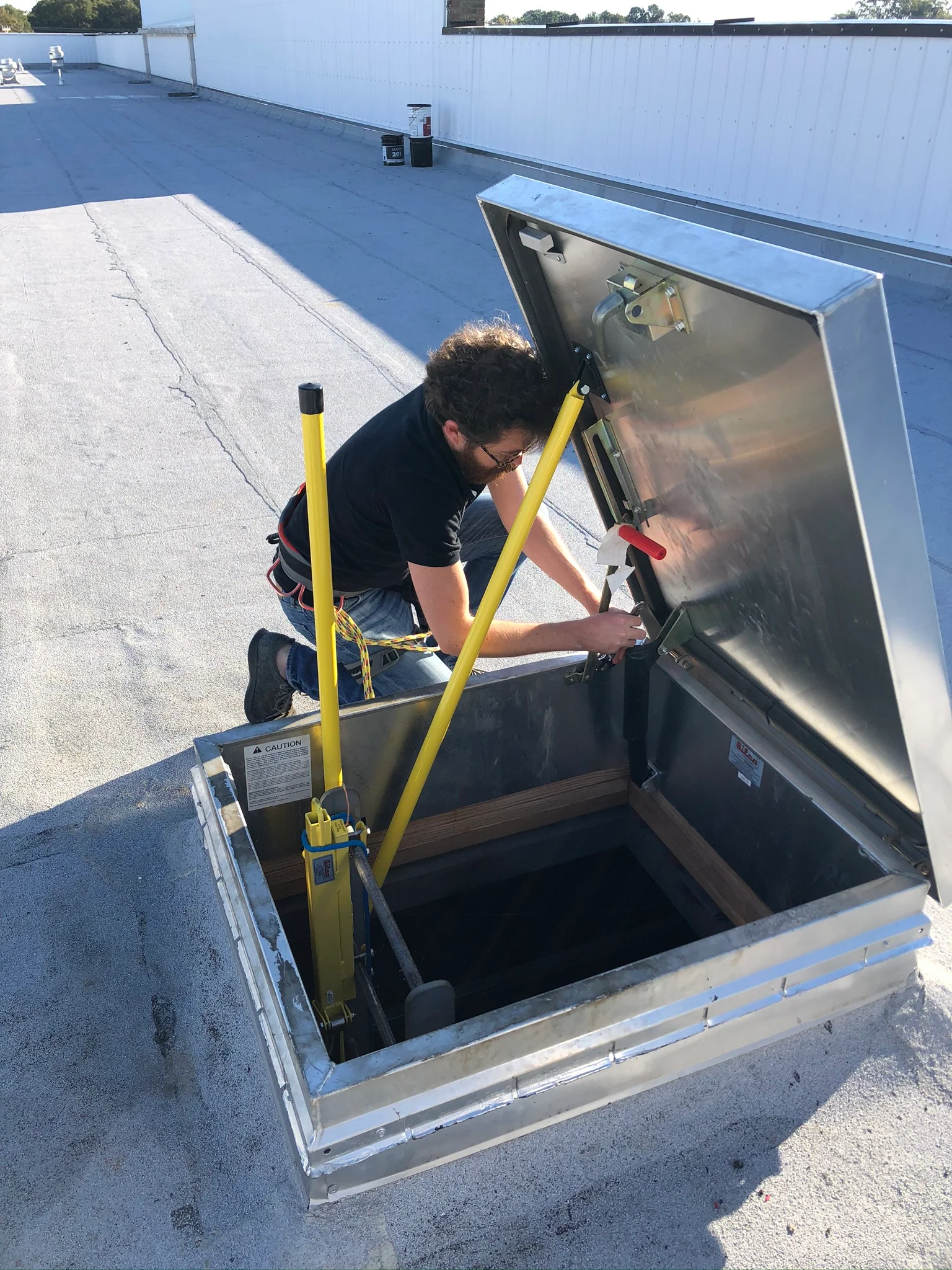
Safety is the number one priority during vertical transitions. Navigating a ladder while carrying tools is dangerous. Modern hatches are equipped with gas-spring assisted lifting, which allows a technician to open the lid smoothly with one hand. Once fully opened, an automatic safety hold-open arm locks the cover in place, preventing it from slamming shut due to unexpected wind gusts while someone is halfway through the opening.
2. Key Components of an Engineering-Grade Roof Hatch
To reach the standard required for modern infrastructure, a roof hatch must be more than just a simple hatchway. It is a calculated piece of safety equipment.
(H3) C. Material Selection for Longevity
Depending on the project’s location—whether it’s a coastal area with high salt spray or a dry industrial zone—the material choice is critical:
- Galvanized Steel: Offers robust strength and is the industry standard for cost-effective, heavy-duty use.
- Aluminum: Provides superior corrosion resistance and a lighter weight, making it ideal for large-scale hatches or coastal environments.
- Stainless Steel: The premium choice for high-corrosive or hygienic environments, ensuring the hatch lasts as long as the building itself.
D. Insulation and Energy Efficiency
Many people overlook the fact that a roof hatch is part of the building’s thermal envelope. High-quality hatches come with internal thermal insulation (often polyisocyanurate or fiberboard) between the metal layers. This prevents heat transfer from the scorching sun into the air-conditioned building, reducing energy bills and preventing condensation buildup on the underside of the lid.
3. Customization for Complex Projects
Standard sizes don’t always fit every architectural need. Modern manufacturing allows for specialized configurations that cater to specific operational goals.
E. Motorized and Equipment Hatches
For facilities that prioritize automation or high-tech security, Motorized Roof Hatches allow for remote operation via a control panel or a smart building system. Furthermore, for buildings that house large mechanical components on the roof, Double-Leaf Equipment Hatches provide a much wider opening, allowing large parts to be craned in or out without dismantling the roof structure.
F. Essential Safety Accessories
To complement the hatch, several accessories can be added to meet the highest safety standards:
- Ladder Safety Posts: Extendable bars that provide a firm grip above the roofline.
- Safety Handrails: Guardrails that surround the hatch opening to prevent falls when the lid is open.
- Fall Protection Screens: Grids that remain in place even when the hatch is open to catch anyone who might accidentally stumble.
4. An Investment in Operational Excellence
A roof hatch is a relatively small component of a building’s footprint, but it plays a massive role in its operational safety and longevity. By investing in a well-engineered access solution, building owners protect their most valuable assets: their people and their infrastructure. A reliable hatch ensures that maintenance teams can work efficiently and return home safely, while the building’s interior remains shielded from the elements.
References
- ASTM International: Standards for metallic coatings and material strength.
- NFPA 82 Compliance: Safety standards for building infrastructure.
- OSHA Fall Protection: Guidelines for safe rooftop access and guardrail requirements.
- ISO 9001:2015: Quality management systems in manufacturing.