

Modern Rubber Flooring Systems represent a pinnacle of material engineering designed specifically for the most demanding architectural environments. In sectors where safety, acoustic control, and extreme durability are non-negotiable—such as high-end fitness centers, clinical healthcare wards, and bustling transport hubs—the choice of flooring dictates the long-term operational success of the facility. Unlike standard synthetic coverings, rubber is a resilient material that offers a unique cellular structure capable of absorbing energy, dampening vibration, and resisting chemical degradation. By integrating these systems into a building’s infrastructure, architects and developers are not just selecting a surface finish; they are installing a high-performance layer that enhances both human comfort and structural longevity.
1. The Engineering Behind Resilient Surfaces
The “architecture” of a flooring system refers to how its molecular composition translates into real-world physical protection.
A. Impact Absorption and Force Reduction
In sports and fitness applications, the primary function of Rubber Flooring Systems is to manage kinetic energy. Whether it is the repeated impact of heavy dumbbells or the plyometric movements of athletes, the floor must act as a shock absorber. Commercial-grade rubber is engineered with specific density levels that provide enough “give” to protect human joints and the concrete subfloor, yet enough “rebound” to prevent permanent indentation. This balance of elasticity and firmness is what defines a high-performance system, ensuring that the material returns to its original shape even after years of intense mechanical stress.
B. Acoustic Engineering and Noise Dampening
One of the most significant advantages of rubber in large-scale institutions is its natural sound-deadening properties. In hospital corridors or multi-level gyms, the “impact sound” of footsteps or moving equipment can create a disruptive environment. Premium rubber systems are designed to significantly reduce decibel levels by trapping sound waves within the material’s dense matrix. This creates a “Quiet Architecture” that is essential for patient recovery in healthcare settings and for focus in educational or corporate environments.
2. Hygiene and Durability in Sensitive Zones
Beyond physical strength, the performance of a floor is measured by its resistance to biological and chemical threats.
C. Antimicrobial Properties and Slip Resistance
In healthcare architecture, the floor must serve as a sterile barrier. High-quality Rubber Flooring Systems are often non-porous and treated to be bacteriostatic, meaning they inhibit the growth of bacteria and fungi without the need for harsh antimicrobial coatings that can wear off. Furthermore, the high coefficient of friction inherent in rubber ensures maximum slip resistance, even when the surface is wet. This makes it the gold standard for areas like hospital scrub rooms and gymnasium shower areas where occupant safety is the highest priority.
D. Resistance to Chemical and Thermal Stress
Commercial rubber is designed to be chemically inert. This means it can withstand the heavy disinfectants used in surgical suites and the sweat and cleaning agents found in fitness centers without delaminating or discoloring. In the climate of Saudi Arabia, the thermal stability of these systems is equally important; they must resist the expansion and contraction caused by temperature fluctuations in semi-exposed or high-glazing areas to prevent the joints from opening over time.
3. Installation Mastery and Lifecycle Value
The architectural integrity of the system is only as good as its execution on-site.
E. Precision Adhesion and Subfloor Integration
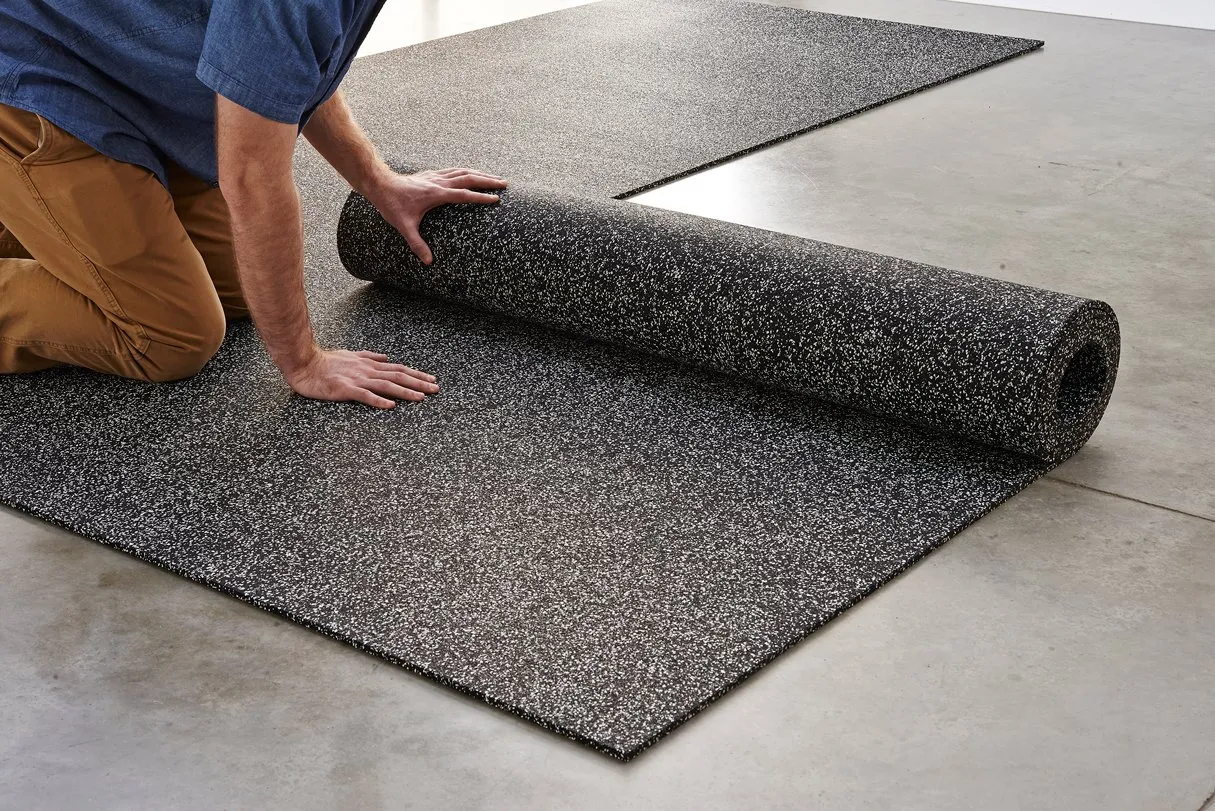
The installation of Rubber Flooring Systems requires a turnkey approach to subfloor preparation. Because rubber is a flexible material, any imperfection in the underlying concrete slab will eventually telegraph through to the surface. Professional installation involves the use of high-strength, moisture-resistant adhesives and meticulous subfloor leveling. For healthcare applications, heat-welding the seams creates a continuous, monolithic surface that prevents moisture from seeping under the floor, which is critical for long-term structural health.
F. Sustainability and Maintenance Efficiency
From a lifecycle perspective, rubber is one of the most cost-effective materials available. It does not require waxing, stripping, or buffing, which reduces the total cost of ownership over a 20-year span. Many modern systems are also manufactured using recycled content and are themselves 100% recyclable at the end of their life, aligning with global green building standards and LEED certification requirements.
the high-performance architecture of rubber flooring is an essential component of modern facility design. It bridges the gap between rugged industrial durability and the sophisticated needs of human-centric environments, providing a foundation that is as safe and silent as it is strong.
References & Links
- ISO 9001:2015: Quality management systems for flooring design and installation.
- ASTM F1344: Standard specification for rubber floor tile.
- EN 1817: Resilient floor coverings – Specification for homogeneous and heterogeneous smooth rubber floor coverings.